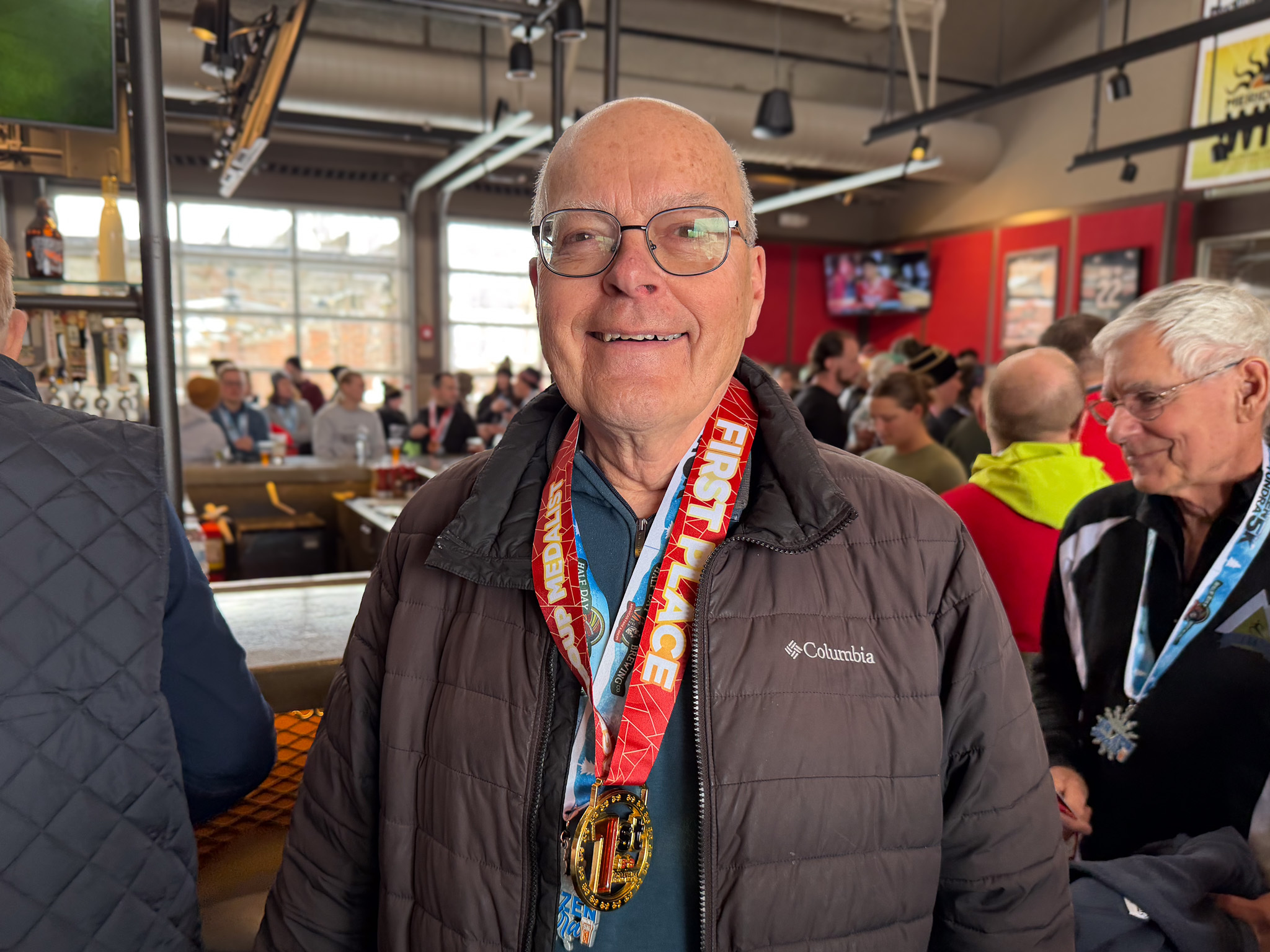
A Conversation with Doug — Alpine Runners Member, RRCA State Representative, and a Runner for Life
Some people seem born to run. Doug was not one of them.
He never ran track in school. Never played organized sports. In fact, when he first tried running in his 40s, he could barely make it around the block.
Today, more than 25 years later, Doug has completed 31 marathons, an ultramarathon, countless half marathons, and thousands of training miles. He has spent decades helping build the running community through Alpine Runners, serving as a pace leader, water stop coordinator, board member, and Treasurer. He now represents both Illinois and Wisconsin as an RRCA State Representative, helping bring championship races to the region.
And in his mid-70s, he still runs several times a week. Not for medals. Not for personal records.
Just because running has become part of who he is.
This is Doug’s story.
It Started with One Block
Doug’s introduction to running came through his son Joe, who ran cross country in high school. Encouraged by his son, Doug decided to give running a try himself. The experience was humbling.
“I struggled to go a block. But with his encouragement, I eventually made it around the block, then a few blocks, and finally a mile. That was the start.”
That single mile changed everything.
First came a 5K. Then a 10K. Then a half marathon — which Doug remembers as “a struggle.” But approaching age 50, he wanted to challenge himself even more.
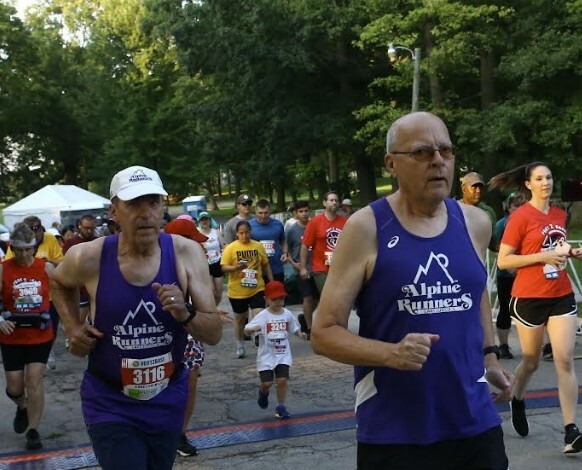
Joe was already running the Chicago Marathon each year. Doug decided to take the leap. He joined Alpine Runners, learned how to train properly, and in the year 2000, completed his very first Chicago Marathon alongside his son.
“Alpine runners showed me what to do, took me through the training, and I ended up running with my son, finishing with a smile. I was hooked.”
That first marathon became the beginning of a lifelong journey.
Running Has Changed — or it Hasn’t
Over 25 years, Doug has watched the sport evolve dramatically.
GPS watches replaced stopwatches. Carbon-plated shoes changed racing. Training apps, nutrition science, recovery tools, and social media transformed how people approach running.
But Doug believes the heart of running remains exactly the same. “Not really much has changed since I started running. The shoes and races cost more, and cotton shirts are gone — but you still need to motivate yourself to go out and run.”
At its core, running is still simple: one person, one road, one step at a time.
Learning to Run in Your 70s
Doug speaks honestly about what running looks like as you age. There is no pretending that things stay easy.
“Running after age 60 has been a struggle — trying to avoid injury while dealing with the reality of slower paces and slower races.”
A torn meniscus eventually ended his marathon running at age 65. Half marathons became his limit. Later, even those became increasingly difficult as pain and recovery demanded more attention.
Today, Doug no longer follows rigid training plans or chases pace goals. Instead, he runs based on how he feels — usually 3 to 8 miles, about three times a week, never on consecutive days so his knees and hips can recover properly. Every day, he also takes a relaxed three-mile walk with his wife.
Perhaps the biggest lesson he has learned is knowing when to push — and when not to. That wisdom did not come during his fastest years. It came with age. “While I may be one of the slowest finishers, I’m probably one of the oldest, too. My goal is to continue to run into my 80s and beyond.”
There is something deeply inspiring about that goal. Not conquering the marathon. Not setting records. Simply continuing.
Motivation Through Family
Doug may not train for races the way he once did, but he still finds motivation through connection.
Garmin and Strava help keep him engaged — especially through friendly competitions with his children and grandchildren over weekly step counts. “I compete with family members — kids and grandkids — in terms of steps per week. That keeps me motivated to get out and move.”
At the same time, experience has changed how he approaches difficult conditions. “My days of running in pouring rain or snowstorms or extreme temps are gone. I no longer feel invincible.”
That sentence captures something many runners eventually learn: wisdom sometimes means knowing when not to run.
Fueling the Journey
During his marathon years, Doug admits he could eat almost anything and run it off. Still, race preparation followed one important principle: no surprises. No heavy meals before races. No experimenting on race day.
Hydration was always his biggest challenge. As a heavy sweater, Doug relied heavily on Gatorade, gels, and salt tablets to manage longer races, especially in hot and humid conditions where leg cramps were often a constant battle.
“Race day would be nothing new, mirroring what I did on my last long run.”
Simple. Consistent. Disciplined.
The Best Races Were Never About Time
After 31 marathons, Doug has experienced countless finish lines. But when asked which races mattered most, his answer had nothing to do with medals or personal records. It was about people.
“Favorite races were always those with family or friends. I enjoyed running with my sons and daughter and with three of my grandchildren.”
The races themselves stretched across North America — from the Manitoba Marathon to the Bay of Fundy Marathon to local trail races along the Des Plaines River Trail. But what stayed with him most were the shared miles.
Giving Back to the Running Community
Doug credits Alpine Runners with helping him achieve something he once thought impossible. Over time, he felt a responsibility to give back.
He became a marathon pace leader for the 9-minute pace group. He volunteered at water stops, eventually coordinating them. He joined the board and served as Treasurer for 16 years.
And through it all, the relationships became as meaningful as the running itself. “During the past 26 years I’ve met many people who I consider my best friends. We’ve trained together, sweated together, and raced together. It’s a second family.”
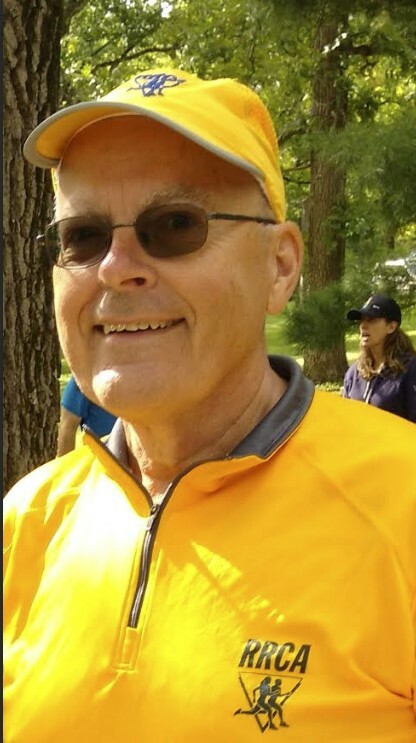
In 2012, Alpine founder Beth Onines asked Doug to succeed her as RRCA Illinois State Representative. He accepted — and today represents both Illinois and Wisconsin, helping organize and support championship-level running events throughout the region.
What energizes him most is seeing others achieve what once seemed impossible to them.
“Seeing participants reach their goals — whether it be their first 5K or their first ultra — their joy is so energizing.”
He also hopes younger runners will continue building the community through volunteering.
“It doesn’t take much time to lead a pace group or help with a water stop. You’re out there running on Saturdays anyway. Just volunteering here and there is a big help — and it feels good to help others.”
Wisdom Earned One Mile at a Time
Doug’s advice for beginners is refreshingly practical.
“Start slowly, increasing your distance and pace. Make it enjoyable so that you will continue. Walking is acceptable and encouraged rather than doing nothing.”
For first-time marathoners: “Follow what your training calls for, don’t start out too fast, and remember your goal is to finish.”
And if he could give advice to his younger self? “I wish I had started running when I was younger.” Coming from someone who didn’t begin until middle age, that statement carries real weight.
Because Doug’s story is proof that it is never too late to begin — and never too late to become something you never imagined possible.
What Running Means Now
Doug no longer measures success by pace, mileage, or race medals. Running has become something quieter and deeper. It is movement, Health, Friendship, Community, Gratitude.
It is proof that consistency matters more than talent. It is proof that showing up matters more than speed.
And maybe most importantly, it is proof that some journeys are not about reaching a finish line at all — but simply continuing to move forward, one mile at a time.